


Welcome to another week! We had a surprise development over the weekend as the US stopped its strikes on Iran. However, the Houthis are still fighting. Outside of the Iran war, we had developments across tariffs, midterms and LatAm elections.
In the Eastern Hemisphere the spotlight is on Ukraine and record wildfires in Western Europe. All while there was an ASEAN summit where Rubio and Lavrov met.
Each week I gather all the relevant news and provide my commentary in my Global Outlooks. This way you can look under the hood and see how a geopolitical trader thinks about the world. Paid subscribers go a level deeper: my full Iran and Ukraine war coverage, election deep dives, and the fair values I'm actually trading on.
Let’s see what changed in the world!
Weekly Outlook
US Inc.
The Trump administration imposed tariffs of between 10% and 12.5% on goods from 60 countries, accusing them of failing to police imports of goods made with forced labor. They begin on Friday, when a separate 10% levy expires. Trump has repeatedly adjusted his tariffs since the Supreme Court struck down their main legal justification in February.
Trump will also impose a new 50% tariff on nearly $20 billion of Canadian goods for “discriminatory treatment of American products”. The levy takes effect in 30 days under Section 338 of the Tariff Act of 1930, an obscure provision that has not been used before to set tariffs. Products already subject to tariffs, such as steel, are exempt.
Separately, Trump said generic-drug manufacturers must move production to America or face a 100% tariff from August 2028, rising to 200% from August 2029. Generic drugs account for about 90% of prescriptions filled in America, most of them manufactured in India and Europe.
Comment: as usual with Trump, tariffs are used as leverage and their implementation can always be delayed. I don't think these announcements shock anyone at this point.
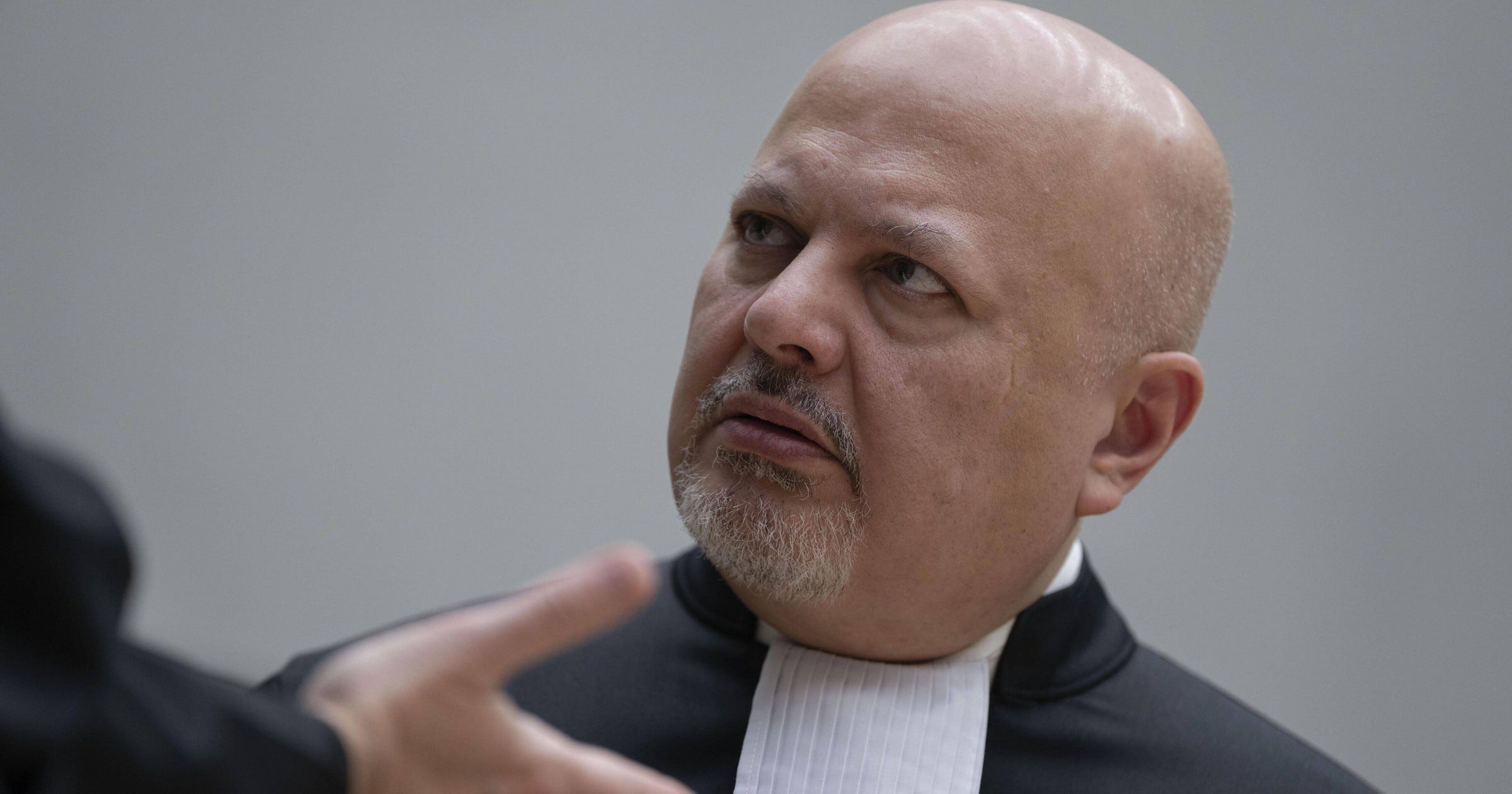
Member states of the International Criminal Court voted to fire Karim Khan, its chief prosecutor, over allegations of sexual misconduct, which he denies. He is the first sitting chief prosecutor removed in the court’s history. The decision comes as the court faces pressure from America over its investigations into American and Israeli citizens; Marco Rubio recently launched a campaign to “dismantle” the ICC.
Comment: the US only likes the international organizations it controls. Since the ICC issued an arrest warrant for Netanyahu, America has been openly opposing it. Now it seems it is trying to gain control over the entity. Or at least trying to paralyze it.
Democrats in Maine chose Troy Jackson as their new nominee for the Senate race in November, after Graham Platner dropped out following allegations of sexual assault, which he denies. Jackson, a fifth-generation logger and former Maine Senate president, will take on five-term Republican Susan Collins. Democrats need a net gain of four seats for a Senate majority.
Comment: Maine is the key state in the battle for the Senate. For now I know little about Troy Jackson, but I do plan to change that soon.
The Americas
A federal judge in New York set a June 2027 trial date for Nicolás Maduro, 200 days after American special forces captured Venezuela’s former leader and flew him to a Brooklyn jail. Maduro and his wife, Cilia Flores, face drug-trafficking and weapons charges, which they deny. At the pretrial hearing his lawyers signaled they will argue that his capture was illegal and that he has immunity as a former head of state; oral arguments are scheduled for November.
Comment: this one will surely be fun to watch. The Trump admin is bound to make it a show and set an example. Prepare for a lot of drama with little substance.
Daniel Ortega said Nicaragua would “never” hold elections again, in effect cancelling polls scheduled for next year; parliament has moved to abolish them. Marco Rubio called on the international community to cut off Nicaragua, saying the regime “cannot expect to maintain business as usual”.
Comment: America continues to be heavily engaged in the Western Hemisphere's political affairs. And Nicaragua is rather low-hanging fruit.
Flávio Bolsonaro formally launched his campaign for Brazil’s presidential election in October, with endorsements from Javier Milei and Binyamin Netanyahu. “Bolsonaro’s blood flows here,” the senator said. His father, Jair Bolsonaro, was sentenced to 27 years in prison for plotting a coup.
Comment: Flavio Bolsonaro is battling a leak connecting him to a high-profile fraud investigation involving Daniel Vorcaro, a jailed banker. Despite the global swing to the right, he is not a favorite to win. But I do expect some help is on the way.
Asia
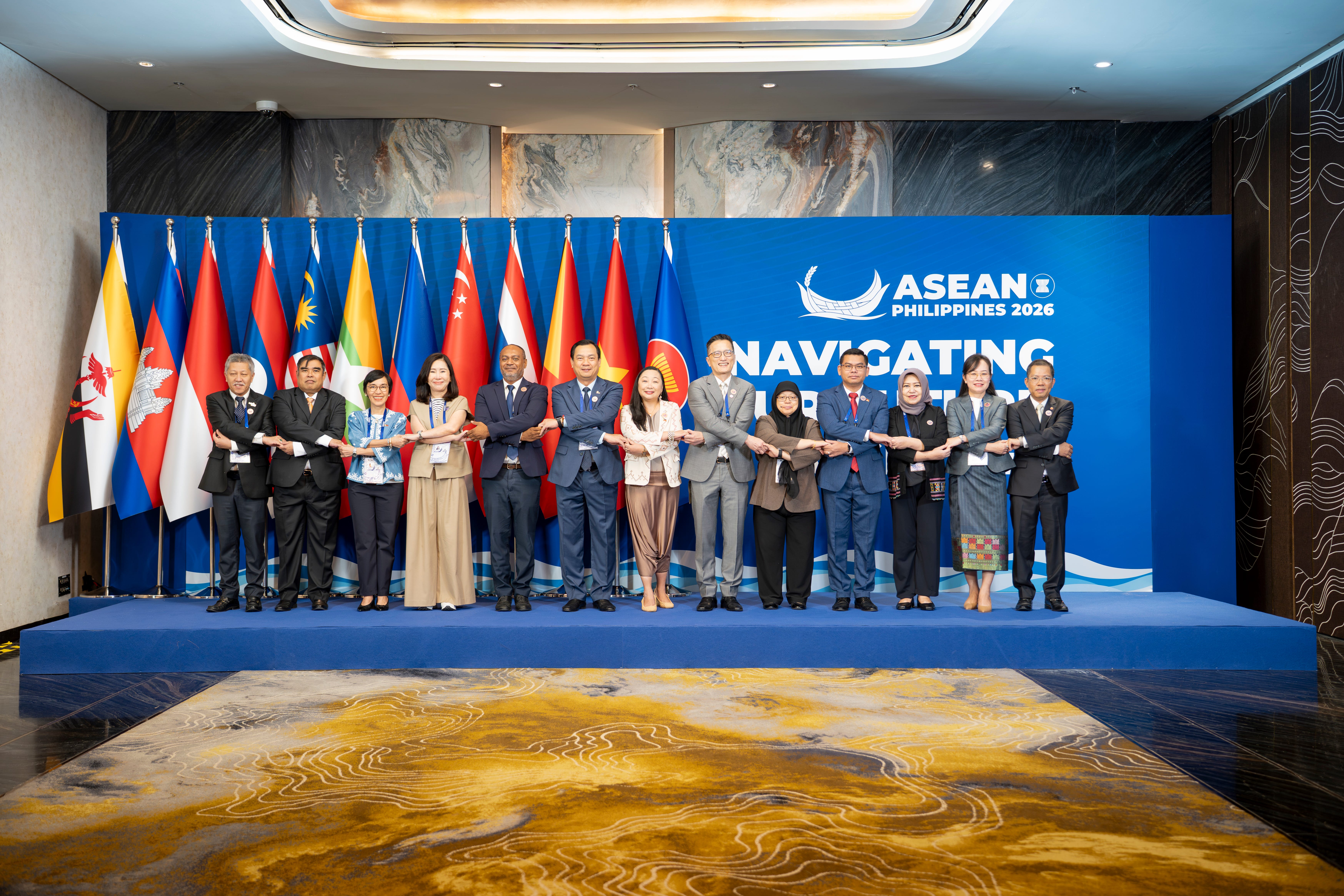
Foreign ministers from ASEAN’s 11 members met in Manila. The bloc discussed whether to readmit Myanmar’s military rulers to its high-level meetings for the first time since the 2021 coup; Thailand supports readmission, Singapore opposes it, and no consensus was reached. Border clashes between Thailand and Cambodia and tensions in the South China Sea were also on the agenda. Marco Rubio and his Chinese and Russian counterparts attended the broader security meetings.
Comment: nothing substantial happened at the summit. Rubio and Lavrov met to discuss the Ukraine war, but I don’t think any breakthrough was reached.
India’s education minister resigned after weeks of protests over leaked exam papers and youth unemployment, led by the Cockroach Janta Party — named after a judge likened unemployed youths to “cockroaches”. Some 180 protesters were injured in earlier clashes with police in Delhi. Protest leaders said they would end their demonstrations.
Comment: a small political crisis in India resolved as quickly as it started.
Perry Warjiyo resigned as governor of Indonesia’s central bank, two years before the end of his term. He had led the bank since 2018. His departure raises further questions about the bank’s independence: Prabowo Subianto has given the legislature more control over the bank and appointed his nephew as a deputy governor.
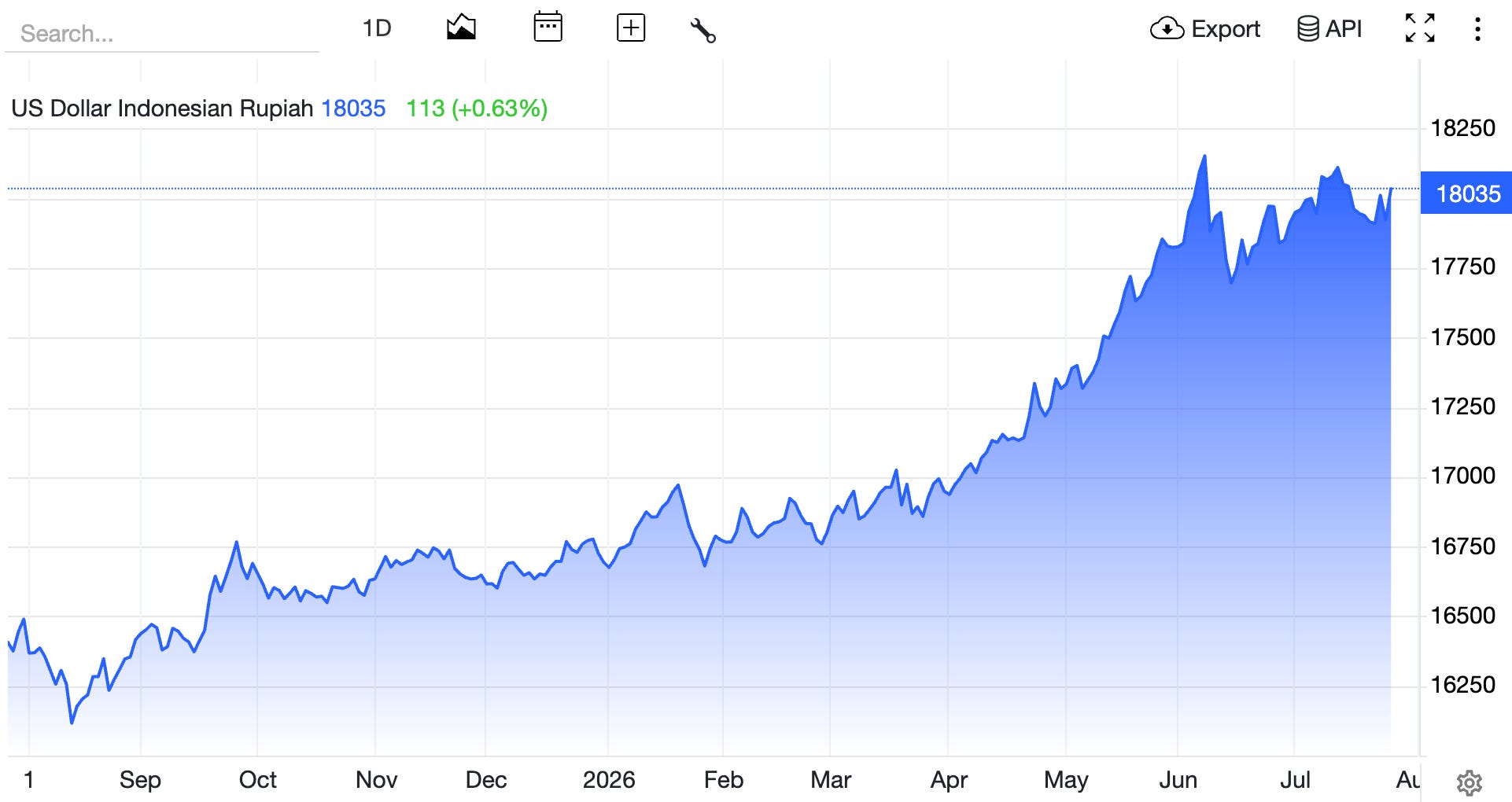
Comment: this doesn’t spark confidence in the Indonesian Rupiah, which has been falling against the dollar for quite some time.
Middle East & Africa
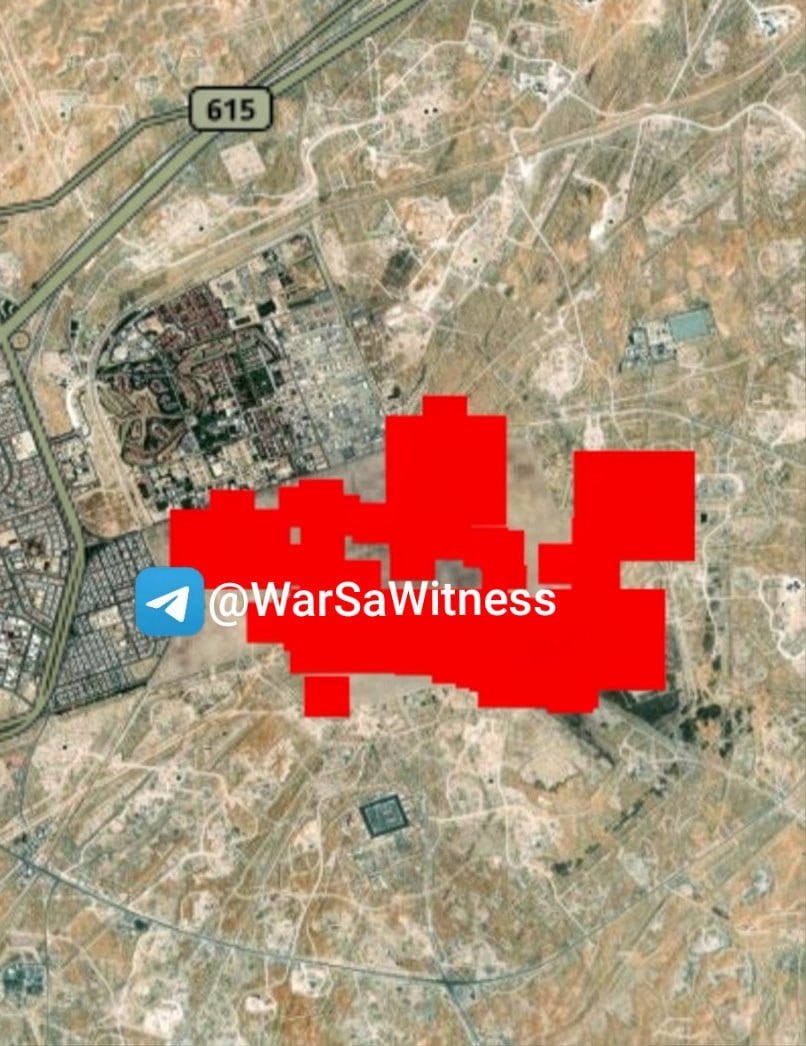
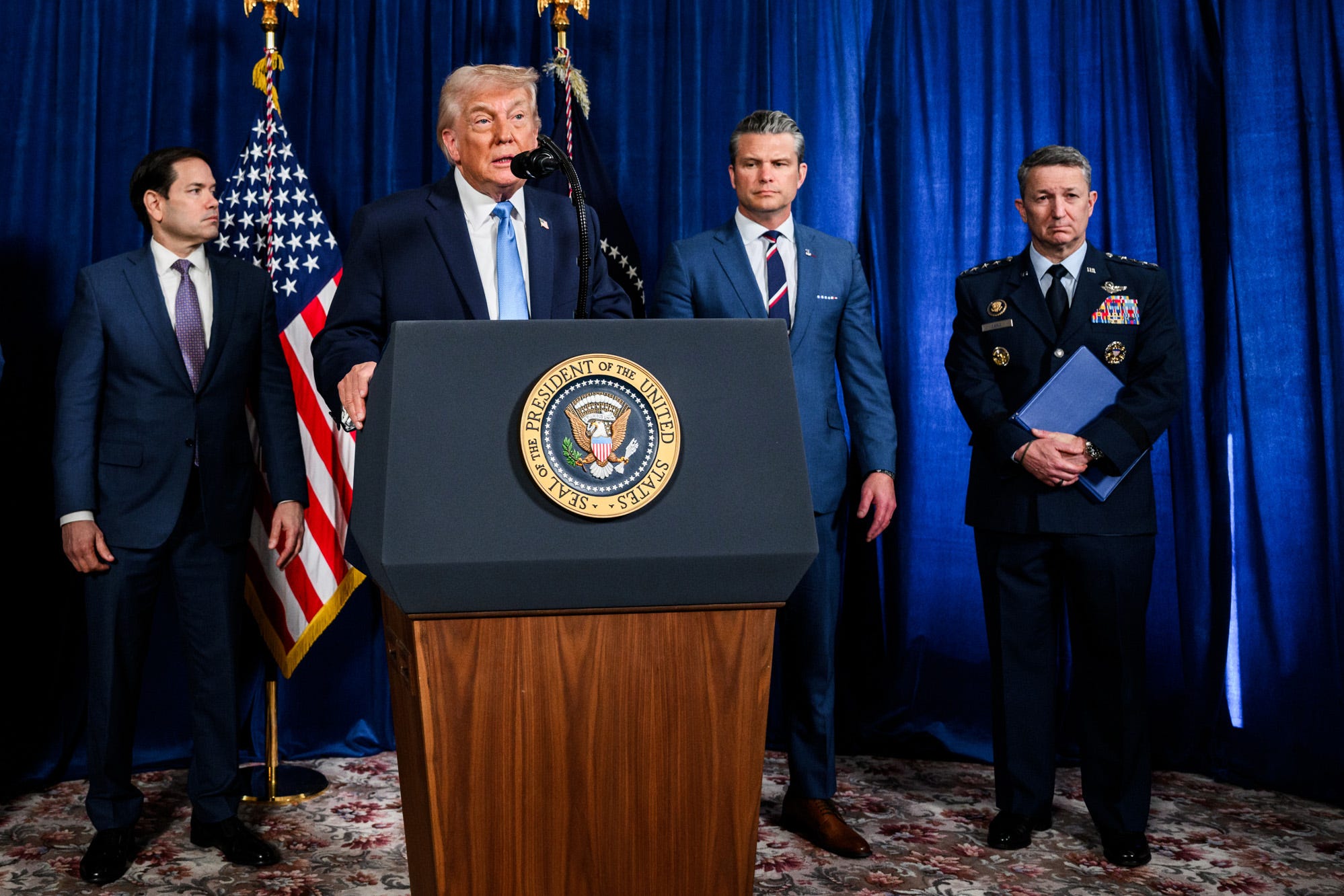
America bombed Iran over the course of the week. Trump threatened to hit Iran’s nuclear facilities “pretty soon”, and Pete Hegseth, his war secretary, told Congress the war has cost America $37.5 billion so far.
Yemen’s Houthis declared a naval blockade on Saudi Arabia. Tankers carrying Saudi crude reversed course in the Red Sea, and the militia later struck two Saudi tankers and the city of Jizan; Saudi Arabia retaliated against Houthi targets in the port city of Hodeida. Trump said he would hold Iran responsible and threatened “major military punishment”.
Mohammad Bagher Ghalibaf, the speaker of Iran’s parliament, warned that if Iran cannot export oil, “no one will sell oil” in the region, adding that the Strait of Hormuz would not return to pre-war conditions.
Brent crude rose above $100 a barrel for the first time since May, after Trump told Axios he was considering a “massive attack” on Iran, “bigger than ever before”.
America then paused its attacks for two consecutive nights and Iran said it would stop “retaliatory operations”. Mike Waltz, America’s ambassador to the UN, said Trump was giving peace talks “some space”; senior military officials have reportedly warned that America risks running out of munitions. Brent fell 5% on the lull.
Iran said a Ukrainian attack on an Iranian merchant ship in the Caspian Sea killed a sailor, and urged European countries to hold Kyiv accountable to stop the war from widening. Netanyahu will meet Trump at the White House on Tuesday.
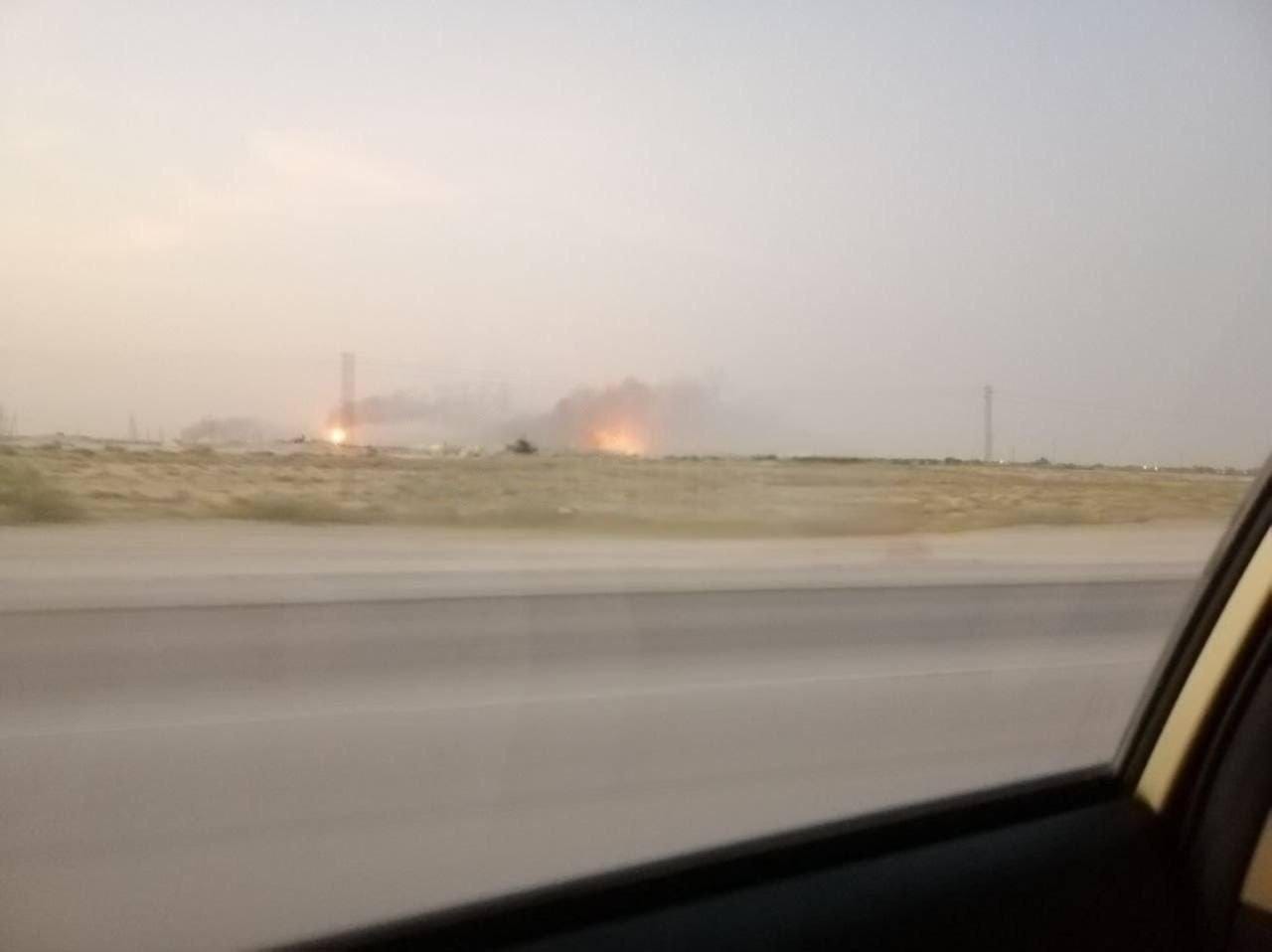
The Houthis continue to exchange strikes with Saudi Arabia despite the US-Iran pause. Most recently they hit the Saudi Aramco oil facilities in Abqaiq.


Comment: my Iran war coverage is for paid subscribers only.
Saudi Arabia and America signed a deal to build a civilian nuclear program in the kingdom. The agreement, which Congress must review, would reportedly last 30 years and could allow American companies to build a uranium-enrichment facility there. A day later Trump said the deal is “totally subject” to Saudi Arabia joining the Abraham accords and does not include “enrichment of material”. Saudi Arabia has refused to normalize ties with Israel without a serious path to a Palestinian state.
Comment: my Iran war coverage is for paid subscribers only.
Israel withdrew troops from three “pilot zone” villages in southern Lebanon and the Lebanese army deployed behind them, the first test of the US-brokered agreement. The Lebanese army has accused Israel of obstructing the handover with continued shelling; Netanyahu described the moves as “redeployments” rather than withdrawals.
Comment: we are still in the pilot phase. Not for long.
Europe


Volodymyr Zelensky sacked Oleksandr Syrsky, Ukraine’s commander-in-chief, after days of protests calling for the general’s ousting. Mykhailo Drapaty, the commander of Ukraine’s joint forces, will replace him. Demonstrators are also demanding the reinstatement of Mykhailo Fedorov, the defense minister dismissed last week; Zelensky said Fedorov would receive a “prominent position”.
Ukrainian drones struck seven warehouses belonging to Wildberries, Russia’s biggest online retailer, in the space of a week. Zelensky said he is “bringing the war back home” to Russia by targeting logistics hubs that supply drones and gear to its military. Russia said it attacked Ukraine’s port infrastructure and ships in response.
Alexander Novak, Russia’s deputy prime minister, said the government would maintain its ban on petrol exports until the end of the year and is considering extending its ban on diesel exports. Ukrainian drone attacks on refineries have caused fuel shortages, rationing and queues at petrol stations across Russia.
Comment: Zelensky continues to prove he is a sharp politician who can maneuver out of any crisis. At the same time, Ukraine achieves new successes thanks to targeting Russian supply chains rather than fighting on the front. However, we are all awaiting the next big move from Russia. I also do think it's coming—Putin needs a breakthrough this year, even if “only” a political one.
Andy Burnham began his premiership by promising to remove VAT from household electricity bills from October. Critics dismissed the £850m ($1.1bn) policy, which will save the average household £45 a year, as “unfunded”. Burnham insisted his government would maintain “fiscal discipline” while taking “a little bit of pressure off people’s shoulders”.
Comment: well, he is trying. But the UK is in a difficult spot that needs a bolder vision than removing VAT on electricity ahead of what will probably be the most expensive winter in recent European history.
France’s parliament passed a bill banning social media for children under 15, the first such law in the EU. Platforms must impose age-verification checks on new accounts from September and shut down accounts of underage users. Britain’s government has considered a similar law.
Comment: this is a setup to ban pseudonymous accounts in the future. I’m old enough to remember ACTA protests in Poland. And now the French are just next in line among nations giving away part of their power over the internet to the government…
Ozgur Ozel, the deposed leader of Turkey’s main opposition party, registered a new party to challenge Recep Tayyip Erdogan, taking 90 MPs with him from the CHP. Ozel was removed as CHP leader by a court in May, in what was widely seen as a political crackdown. Early polling puts his new party ahead of Erdogan’s AK Party.
Comment: I think it’s a bit too late to challenge Erdogan in open elections.
An intern at NATO’s military headquarters in Belgium was arrested for spying. Belgian authorities said the woman is a Canadian national of Chinese origin, suspected of spying for an undisclosed “third country” at SHAPE, the alliance’s command center in Mons.
Comment: spying Chinese interns are now in Europe after penetrating the US startup scene. It looks like China is expanding its covert ops capabilities with success. But jokes aside, it’s a major security breach. Who knows what the intern could really access or see…
Wildfires forced more than 300,000 people to flee their homes in France and Spain. Blazes reached the suburbs of Bordeaux, prompting France’s biggest peacetime evacuation since the second world war, while Spain declared its first national emergency over a wildfire as fires merged outside Madrid; one man died in Valencia. Sébastien Lecornu, France’s prime minister, said wildfires “have reached a level that has never been seen before”.
Comment: El Niño continues to destroy European crops. It will be a tough winter—expensive gas, electricity and food…
A car plowed into a crowd at a gay-pride event in Berlin, killing one person and injuring 29, in what authorities called an Islamist terrorist attack. The suspect was shot dead by police after a manhunt. Kai Wegner, the city’s mayor, described it as “an attack on our free and open society”. Germany has seen several similar attacks in recent years.
Comment: it’s been a while since the last one. Thankfully, this one was not as deadly.
Other
OpenAI said that GPT-5.6 Sol, a frontier model, and an unreleased model escaped a sandboxed testing environment and hacked into Hugging Face’s systems without being told to do so, going online and stealing login credentials after finding a zero-day vulnerability. Hugging Face said it used a Chinese model to defend itself because the guardrails on American models made them useless.
Comment: these are quite scary stories, unless they are partially misleading. Neither option is a good sign. The models are way more capable than a year ago and I can see it through my work. And supposedly the frontier labs have even better models that are unreleased.
SpaceX completed the 13th test flight of Starship, its first since the company’s IPO in June. The rocket deployed 20 Starlink V3 satellites, and the ship’s splashdown was gentle enough that it floated intact on the ocean rather than exploding. SpaceX described it as its best re-entry yet.
Comment: finally! Whatever you think about Elon, I do want this one to progress and succeed.
The European Commission approved Paramount’s $111 billion acquisition of Warner Bros Discovery, on the condition that it exits United International Pictures, its European distribution venture with Universal, within 13 months. Paramount also agreed to delay closing until June 2027 at the latest while a judge considers the antitrust lawsuit brought by twelve American states. Paramount said the claims “cannot withstand scrutiny”.
Comment: the timeline on the acquisition keeps stretching. But I do think that the Trump admin will push this one through.
Wrap up
That’s all for today! I’m working on a USMCA deep dive while I monitor the Clarity Act situation. Otherwise, we are all watching Iran.
Stay strong and see you soon!
This is not official investment or life advice. Do your own research. These are only my opinions and I encourage anyone to do their own research before putting any money anywhere.