


I’m reviving this series as a forecast update on the global events I cover. While deep dives are great for introducing a new thesis, they are not optimal for updating—often I needed to repeat large parts of a thesis in each update as deep dives are standalone content and always require context. Now, I will be able to update you on a rolling basis and build up my theses step by step.
Today I’ll focus on the Iran and Ukraine war developments and the latest on the Fed decision in September. The last Forecast Update is here for context:

Iran
The most recent deep dive on Iran:

And a small update:

The Iran peace markets are at their lowest level ever and so are the Strait of Hormuz traffic normalization markets:
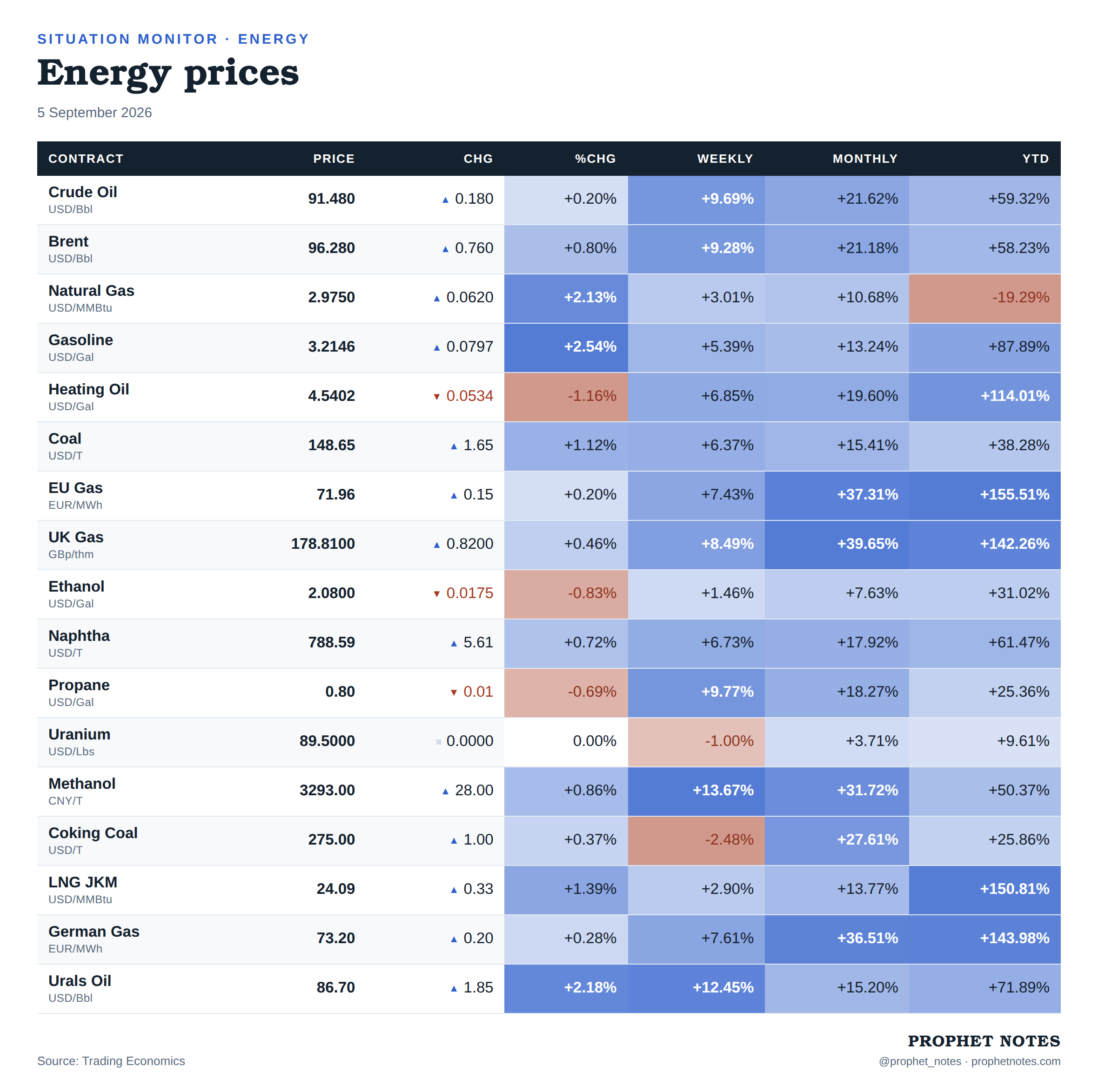
Oil markets are near 2026 highs as well:
Sentiment is as bearish as it gets:
We’ve seen another round of kinetic strikes.
There’s no peace narrative circulating.
Trump is reportedly mulling exiting the war.
Diesel cracks are at record highs.
And the situation seems to be in a strange equilibrium—diplomats are still engaging (Qatari and Pakistani trips most notable in recent days) while any kinetic attacks are rather limited in scope and duration. We are still playing the game of chicken. For the next two months, however, Iran holds the upper hand.
Since neither side will invade anything, we are analyzing runways, supply chains and domestic politics, rather than military capability. Here, there’s a striking (pun intended) asymmetry:
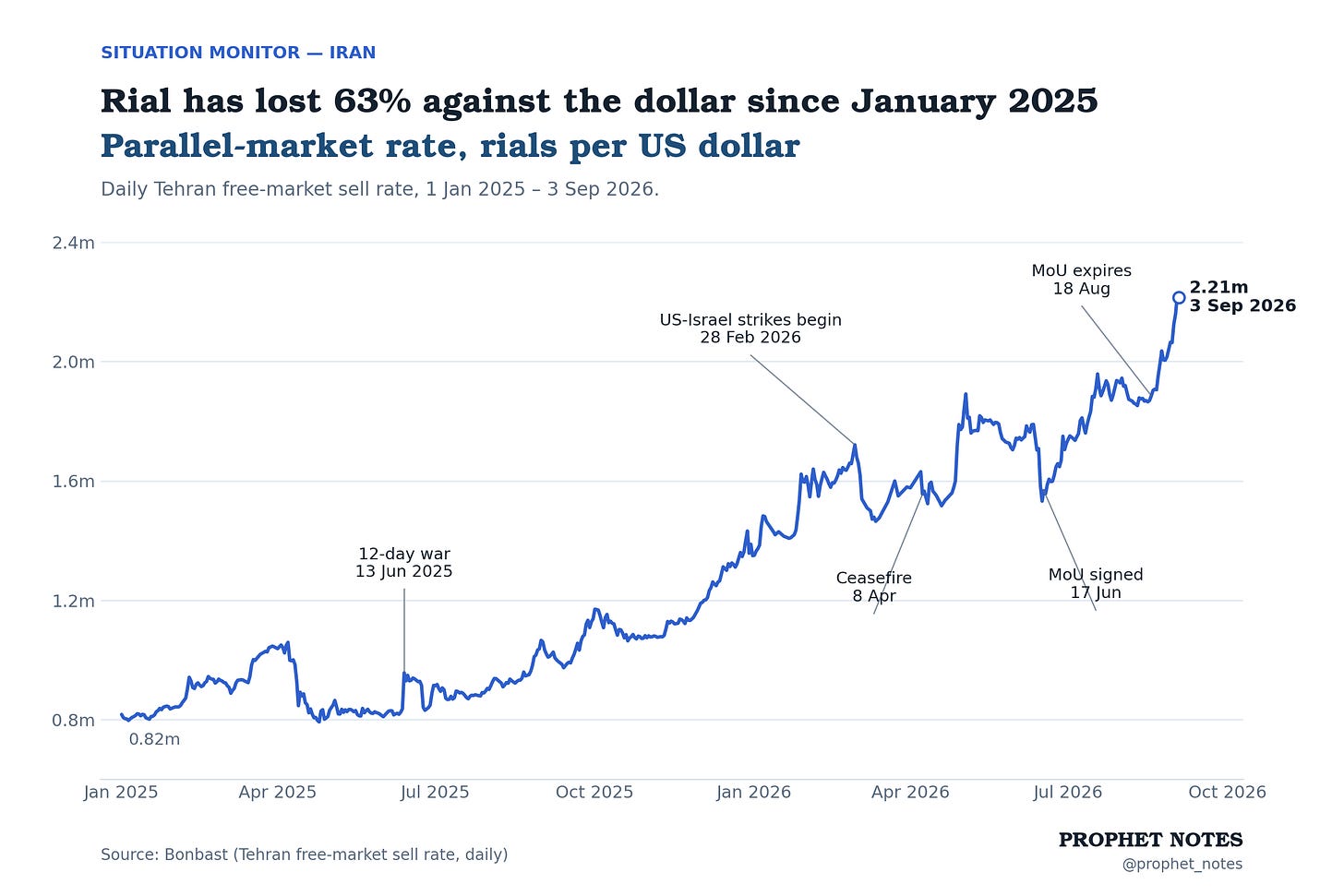
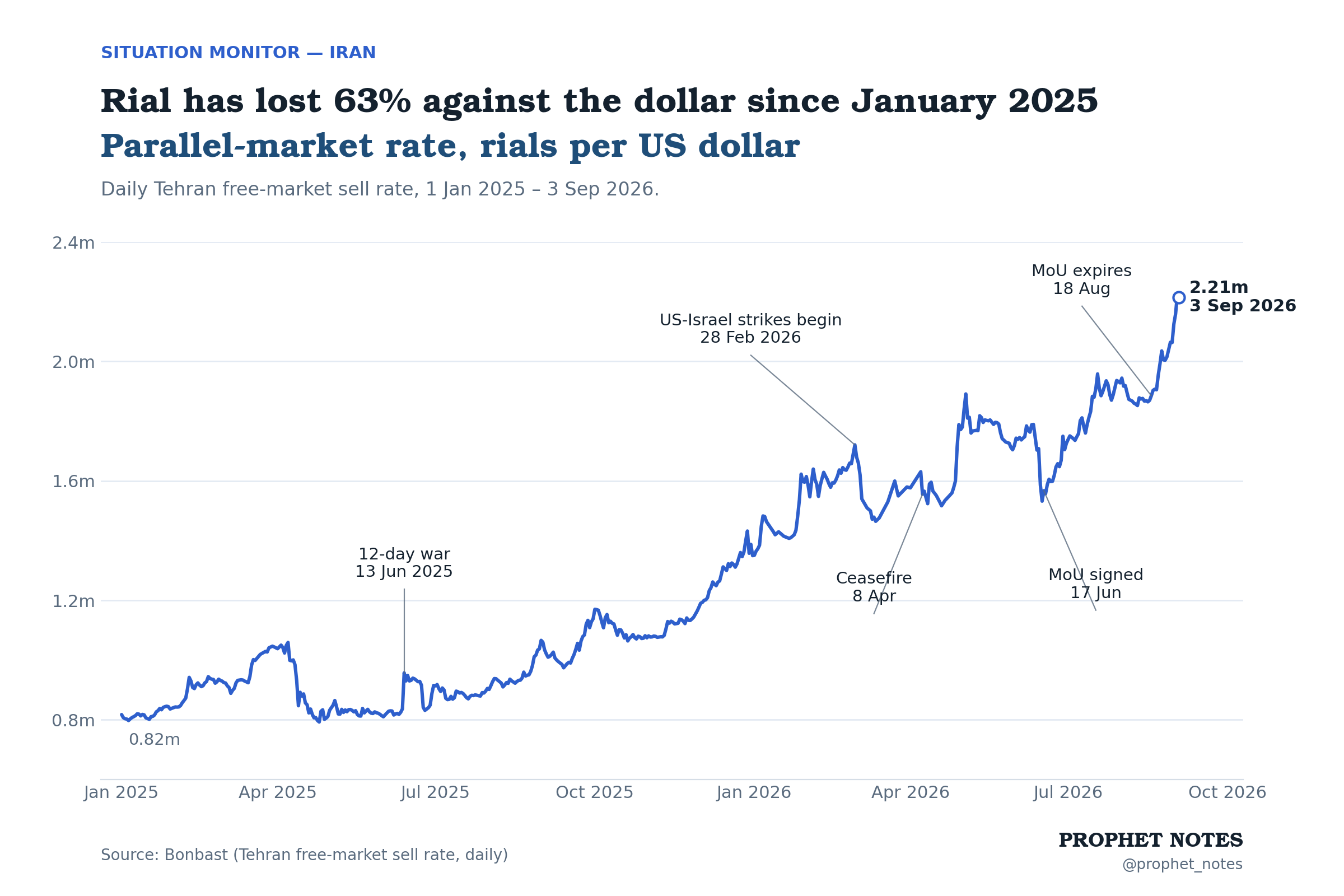
Iran already feels all the pain it can. Exports are effectively blocked, so it has limited access to foreign currency. Industrial capacity is decimated and shortages of basic goods are pushing inflation higher. Coups and revolts have historically needed much less to spark. That being said, Iran’s runway is still measured in months, even years—IRGC seems to be in full control of the political apparatus, the economy and Artesh itself. And Iranians are like the Soviets: they are used to shortages.
The US, and the rest of the world, on the other hand, has yet to feel the real pain. Diesel, jet fuel, LNG, sulfur, helium and many other commodities are near or at ATHs. Fertilizer is scarce and will impact food supply next year and beyond. The SPR is at its lowest level since 1982, when it was being filled. Everything is strained, but nothing has broken yet.
Trump faces difficult midterms with the global economy strained to the limit. While Americans will hardly starve, they will feel the pain in prices. And in potential wars all around the world if we really hit the wall at full speed.
What I see happening next: