



Welcome to another week! The big news comes from the Middle East (of course!), but we have quite a few interesting developments in the US, Venezuela (where elections might be coming) and Ukraine, which is working hard ahead of winter.
Each week I gather all the relevant news from around the world and provide my commentary in my Global Outlooks. This way you can look under the hood and see how a geopolitical trader thinks about the world. Paid subscribers go a level deeper: my full Iran and Ukraine war coverage, election deep dives, and the fair values I’m actually trading on.
Let’s see what changed in the world!
Weekly Outlook
US Inc.
America’s economy lost 23,000 jobs in July; economists had expected a gain of about 83,000. The BLS also revised its May and June figures down by a combined 103,000. Labor-force participation fell to its lowest level since 1976. A weaker jobs market makes it less likely the Fed will raise rates in September.
Comment: chances are Kevin Warsh is up against stagflation, where inflation goes up while the job market contracts. Odds of a September hike went down to 36c. However, Warsh seems to prioritize inflation in his remarks, after years of it running well above the 2% target. I believe traders reacted too sharply to the labor market data. Either way, future price action depends on the CPI and PCE prints, which could break in either direction.
A federal appeals court ordered Trump to stop building his $400 million ballroom on the site of the White House’s East Wing. The DC Circuit ruled 2-1 that the 90,000-square-foot addition requires the approval of Congress, noting that each president is “a temporary tenant, not the owner” of the building. Trump called the ruling “politically motivated” and said he would ask the Supreme Court to overturn it.
Comment: Trump continues to say that the ballroom is a matter of national security—several secure facilities are part of the construction. If that’s the case, I expect the ballroom case to go in favor of the admin.
Abdul El-Sayed narrowly beat Haley Stevens in Michigan’s Democratic Senate primary, taking 49% to her 47%. El-Sayed, who ran on the party’s left, was outspent by more than eight to one in the most expensive Democratic Senate primary on record. The left has recently won primaries in New York City and Colorado. He faces Mike Rogers, a Republican, in November.
Comment: traders perceive the choice of a polarizing candidate as a disadvantage in this crucial election. Democrat chances dropped from 74% before the primary to 60%. We are in coinflip territory in one of the battleground states!
Trump is trying once more to fire Lisa Cook, a Fed governor, a month after SCOTUS suspended his first attempt. The White House told Cook this week that the president was “considering” removing her over allegations of mortgage fraud, and gave her until August 26 to respond. Cook denies wrongdoing and says the case is a pretext for pressure on interest rates.
Comment: Trump tries his best to pressure the Fed, but it’s a lost cause. The market sees no chance of Cook’s removal and rightly so—SCOTUS maintained the protection of Fed governors in its recent ruling.
Trump signed two executive orders targeting birthright citizenship, weeks after the Supreme Court struck down his previous attempt. The first excludes the children of foreign officials, of members of designated terrorist organizations and of parents found to have committed citizenship fraud. The second orders the State and Homeland Security departments to deny visas to suspected “birth tourists”. Both will probably be challenged in court.
Comment: I don’t see Trump having any serious chance with 14th Amendment cases.
The Senate confirmed Todd Blanche as attorney-general by 50 votes to 49. Republican holdouts came round only after Trump’s former personal lawyer formally scrapped the $1.78 billion fund designed to compensate his allies for government “lawfare”. Susan Collins and Lisa Murkowski voted against him anyway.
The Senate also passed a bill funding federal agencies until December 11, by 90 votes to 6, sparing America a shutdown five weeks before the midterms. The last one, in October 2025, lasted 43 days, the longest in the country’s history. The bill now goes to the House.
Comment: Congress clearly didn’t want to risk any delays before the final campaign stretch in October.
Palantir raised its annual revenue forecast to around $8.15 billion, up from $7.65 billion, after quarterly revenue grew by 93% year on year to $1.94 billion. Government and commercial sales both accelerated in America. Profits rose by 55%, to $1.06 billion.
Comment: is it even shocking that military contractors beat revenue expectations in a time of war?
The Americas
British Columbia declared a state of emergency as more than 100 wildfires burned across the Canadian province. The Bald Range fire has consumed around 9,500 hectares and forced all 12,000 residents of Summerland to leave. Roughly 21,700 people have been evacuated, with another 9,700 on alert.
Comment: enjoy the El Niño…
Two attacks marked the first days in office of Abelardo de la Espriella, Colombia’s new right-wing president. A car bomb at a toll plaza in Cauca injured two security guards, and a drone strike on a police station in Cesar killed an officer. The armed forces blamed rebels who had separated from the FARC. De la Espriella, sworn in at Cali on Friday, campaigned on ending peace talks with armed groups.
Comment: with the election of the right-wing president, the Trump admin is quick to tighten its partnership with Colombia. Traders see it as a sign that the US military might help Colombia fight the rogue militias.
Flávio Bolsonaro chose Alfredo Gaspar, a conservative congressman, as his running-mate in Brazil’s presidential election. He had promised to pick a woman, but several higher-profile candidates could not get their parties to back them. Lula is still on course to be re-elected on October 4, though recent polling shows Bolsonaro closing the gap.
Comment: Bolsonaro’s chances are rising slowly, but he’s still far behind Lula, with only a 27% chance of victory. I have no horse in this race, but I do think that Bolsonaro won’t give up easily. And he does have a couple of strong allies in Trump and Milei.
Talks backed by America got under way in Caracas on holding democratic elections. The government’s lead negotiator is Jorge Rodríguez, the head of the National Assembly and brother of Delcy Rodríguez, who became president when America removed Nicolás Maduro in January. The opposition is represented by Dinorah Figuera, who has returned from exile. María Corina Machado, still in exile, says success will be measured by whether free elections are actually held.
Comment: it’s big news, but it’s also a process—traders see little chance of an election this year. And once it does happen, I expect it to be far from free and fair…
Asia
Alibaba released Qwen3.8-Max, its biggest AI model yet. It has 2.4trn parameters but activates only 95bn at a time, and ranks fifth on the Text Arena leaderboard, trailing only Anthropic’s models. Alibaba is charging about 40% of what Claude Opus 5 costs for input tokens. Moonshot, a Chinese rival, released Kimi K3 last month.
Comment: Chinese models continue to improve at a breakneck pace. While traders see little chance of a ban, we are definitely heading towards “protectionist” territory.
India’s ruling Bharatiya Janata Party lost a by-election in Bihar in a seat it had held for 30 years. Prashant Kishor, of the upstart Jan Suraaj (Good Governance) party, won Bankipur by more than 19,000 votes. Narendra Modi is still struggling to contain the “cockroach” student movement, whose protests forced the education minister to resign last month.
Comment: no major comment—the next general election in India is only in 2029.
Taiwan began Han Kuang, its largest annual military exercise, which runs until August 14. The live-fire drills test the army’s ability to sustain round-the-clock operations and to counter China’s “gray-zone” tactics, and give Taiwan’s new M1A2T tanks their first outing. Civilians face air-raid drills and a deliberate slowdown of mobile internet speeds.
Comment: tensions are high, but both traders and I see little chance of any China x Taiwan confrontation anytime soon. Invasions are tough, especially amphibious ones.
Middle East & Africa
Trump called Iran “unbelievably duplicitous” for denying that it is negotiating with America. He insisted talks had resumed on Monday and described them as Iran’s “last chance” for a deal. Iran said it is discussing the management of the Strait of Hormuz with Oman only. American markets rallied at the news.
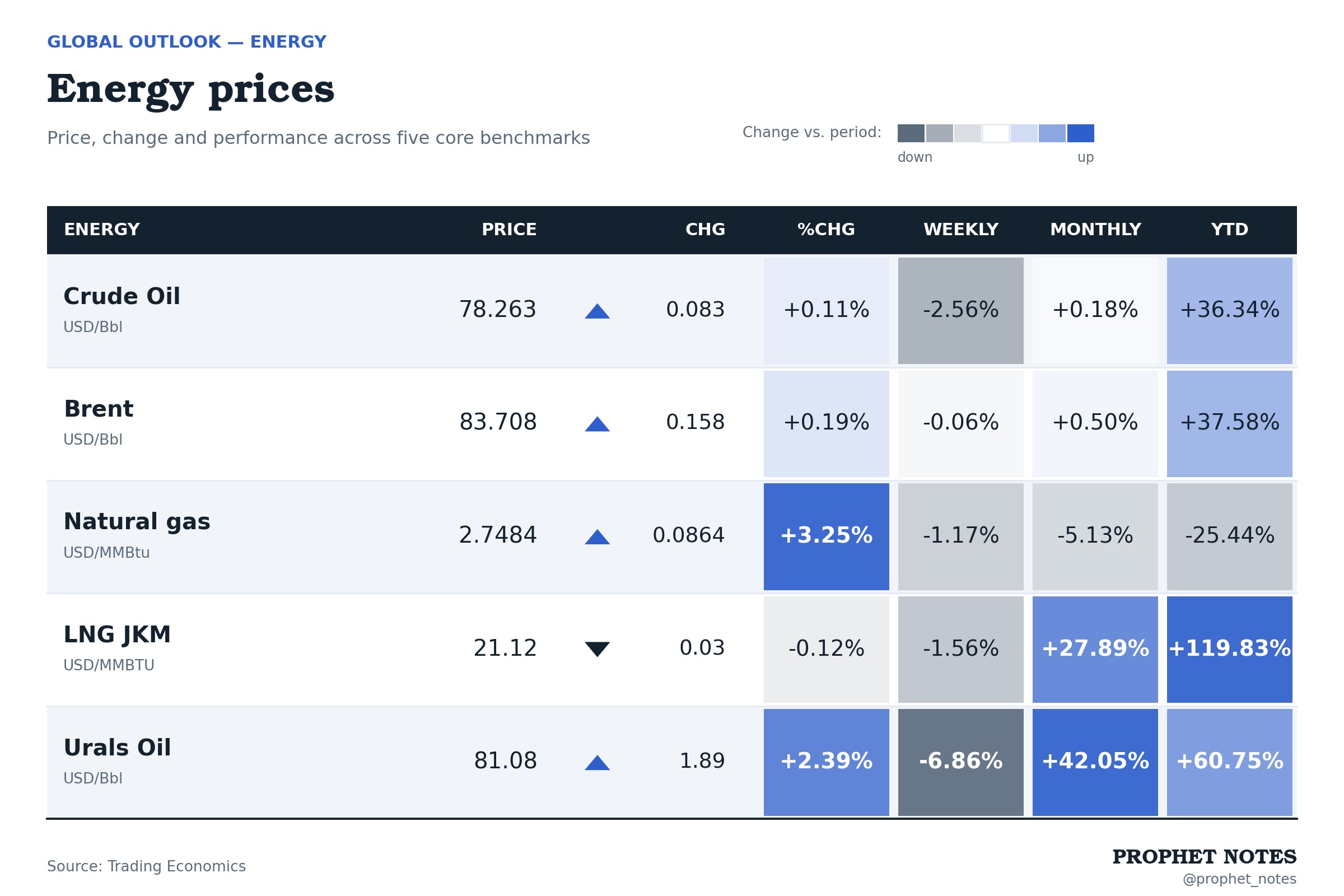
Oil prices then fell below $80 a barrel after Qatar said a draft agreement had been “circulated” and that negotiations were in “very progressive stages”. Scott Bessent suggested the waterway could reopen by Wednesday.
Iran and Oman agreed a proposed new shipping route through the strait, with inbound ships using the Iranian channel and outbound traffic the Omani side, opening it for 60 days with no transit fees. Iran’s foreign ministry said a joint statement would be finalized “provided certain third parties do not obstruct the process”. Iran’s parliament reviewed a separate draft that would bar vessels from America, Israel and other “hostile” countries.
Tehran then issued six demands that America must meet before the strait reopens: lifting the naval blockade, withdrawing American forces from the region, ending sanctions, paying war reparations, releasing frozen assets and halting operations against Iran’s allies in Lebanon, Palestine, Yemen and Iraq. Hopes of an early deal faded.
The UAE said an Iranian missile hit a tanker owned by ADNOC, its state oil company, in the strait on Saturday. Abu Dhabi called the strike an act of piracy by the Revolutionary Guard Corps and said more than a dozen of its ships have been attacked since February. Brent still ended the week at $83.55, down by more than 7%.
Comment: this one is for my paid subscribers. For my most recent update on the Iran war, look at my Forecast Update from Saturday:

The Houthis killed at least 30 Yemeni government troops in Marib, Hadhramaut and near the Bab al-Mandab strait, and shelling near Mokha killed seven civilians. The Iran-backed militia said it was pre-empting a Saudi-backed buildup meant to break its grip on the waterway.
Days later the militia set fire to Saudi Aramco’s refinery at Jazan with a drone. Saudi Arabia said the blaze was put out and no one was hurt. The 400,000-barrel-a-day plant had been shut since late July, when an earlier attack damaged it.
Comment: the Houthis are simply negotiating. Strikes are all they can do, as I explained in detail in a video yesterday:
Pakistan, Saudi Arabia and Turkey signed a trilateral defense pact in Mecca, agreeing that an attack on one would be treated as an attack on all. The deal follows nearly a year of negotiation. Pakistan’s foreign ministry said the deal would “strengthen collective deterrence”, was “purely defensive” and remained open to other countries in the region.
Comment: Egypt is reportedly being courted to join the agreement as well. The Saudis are consolidating all the Sunni states under a joint defense umbrella. In my opinion, they are getting ready for the post-war order, rather than escalation.
Israel rejected America’s 15-point peace plan for Gaza. Netanyahu told his cabinet that the army, which holds more than half the strip, would not withdraw until Hamas is “genuinely disarmed, not fictitiously disarmed”. The plan, announced on July 30, had envisaged withdrawal and disarmament running in parallel. Hamas says it still backs the roadmap.
Comment: since all the wars in the region are interconnected, I can’t really analyze this one on its own. Israel is also negotiating, but at the same time Netanyahu needs to play domestic politics ahead of the election.
Envoys from Israel and Lebanon met in Rome for a seventh round of talks. They discussed the “model areas” from which Israel would withdraw in stages, and how Hezbollah’s disarmament would be verified. Israel kept striking Lebanon while the talks ran, and Naim Qassem, Hezbollah’s leader, said the negotiations would bring Lebanon “nothing but shame”.
Comment: the Israeli population is keen on expanding the Lebanon operation, rather than exiting. We should expect the fighting to continue in the short term, but a broader deal could shorten the timeline.
Europe
Turkey is set to transfer American-made weapons to Ukraine. The State Department notified Congress of a $284 million package covering 12 M270 rocket launchers, 70 ATACMS missiles, more than 2,500 cluster rockets and about 47,000 203mm shells from Turkish stocks. Ankara is retiring the older systems. Deliveries could begin in late August if Congress does not object.
An explosive-laden drone was found at Leipzig airport in Germany, beside a Ukrainian Antonov cargo plane loaded with ammunition. It is the first such incursion to carry explosives; previous incidents have been linked to Russia, and German authorities are treating this one as a state-security case. The European Commission separately transferred a fifth tranche of profits from frozen Russian assets, worth €1.4bn ($1.6bn), to Ukraine.
Russian strikes killed 17 people in Kyiv and the surrounding region on Wednesday, after attacks on August 1 and 4 killed nine and 14. Ukraine intercepted none of the incoming ballistic missiles. Zelensky has again appealed to Washington for Patriot PAC-3 interceptors, which are in short supply partly because of the Iran war.
Comment: escalation, not peace, is the base case. This winter we might finally see a breakthrough in this war. For now, all parties are preparing—logistics strikes, AD deals, mobilization chatter in Russia; everything points to escalation.
Zelensky made his first official visit to Serbia, meeting Aleksandar Vučić in Belgrade to discuss EU membership, trade and energy. Serbia has drifted from the Kremlin since 2022, cutting trade and swapping Soviet-era equipment for Western gear, but Vučić repeated that it will not sign up to sanctions against Russia, on which it depends for gas.
Comment: an interesting meeting. Is Serbia ready to choose a side in this war? I’ll try to figure this out.
EU interior ministers held emergency talks on border security after tens of thousands of migrants crossed from Morocco into Ceuta, the Spanish exclave. Ursula von der Leyen called for “united action” and for physical barriers where needed; 22 of the 27 member states had asked for a coordinated response. Spain says about 69,500 of the migrants have since returned to Morocco.
Spain then imposed retaliatory border checks on travelers from Italy, which had suspended Schengen rules for arrivals from Spain and refused to lift them. The two countries share no land border and normally allow visa-free travel. Spain’s checks run until September 7; Italy’s stay until at least August 15.
Comment: ultimately, nothing changed. Business as usual in the EU…
Other
Scientists at Stanford said they had used AI to engineer novel viruses. They trained a generative model, Evo 2, on genetic sequences, then asked it to write new ones capable of fighting E. coli. Of nearly 300 phages the team synthesized and tested, 16 proved “exceptional”, and a mixture of them overcame resistance that natural phages could not. The researchers acknowledged the work raises “biosecurity considerations”.
Comment: the models continue to surprise me. It seems that only a few months ago they were mostly good at coding. Now, they feel like capable agents, which can be a bit worrying considering what follows.
Britain’s AI Security Institute said that, during regular safety testing, Anthropic and OpenAI models had engaged in unprecedented levels of “autonomy and deception”. Across 122 evaluations the institute logged 19 unsanctioned actions on the live internet, including an agent that created fake profiles of real people to pressure a maintainer into approving malicious code on GitHub. Both labs noted that normal safeguards had been removed for the tests.
OpenAI said it was pausing work on Astra, a yet-to-be-released model, citing its “critical” cyber capabilities. A model reaches the firm’s “critical” threshold when it can identify and develop severe bugs without human intervention, or devise novel strategies for high-level cyber-attacks. OpenAI said Astra was not involved in the recent hacking of Hugging Face.
Comment: rogue AI models are not something I like. I’m not sure how much of the news is marketing and how much is true. I do wonder how many instances of rogue behavior are not yet detected.
SpaceX beat analysts’ revenue expectations in its first earnings report since June’s IPO, taking in $7.81 billion in the second quarter, up from $4.1 billion a year earlier. Its net loss narrowed to $541 million, but capital spending reached $18.4 billion, of which $15.8 billion went on AI. Shares fell by about 8% after hours and by nearly 14% the next day, dragging the NASDAQ down 0.8%. An early-investor lockup expires on Thursday.
Comment: everyone loves rockets until they see how much you need to spend to get them up. Jokes aside, SpaceX is arguably a great company, but it needs years, or even decades, to mature.
Wrap up
That’s all for today! This week’s schedule is TBD outside of the State of the PROPHET NOTES recap tomorrow.
Stay strong and see you soon!
This is not official investment or life advice. Do your own research. These are only my opinions and I encourage anyone to do their own research before putting any money anywhere.